
Automated fuel tank pre-assembly
Cobot builds a variety of tanks with different screw patterns
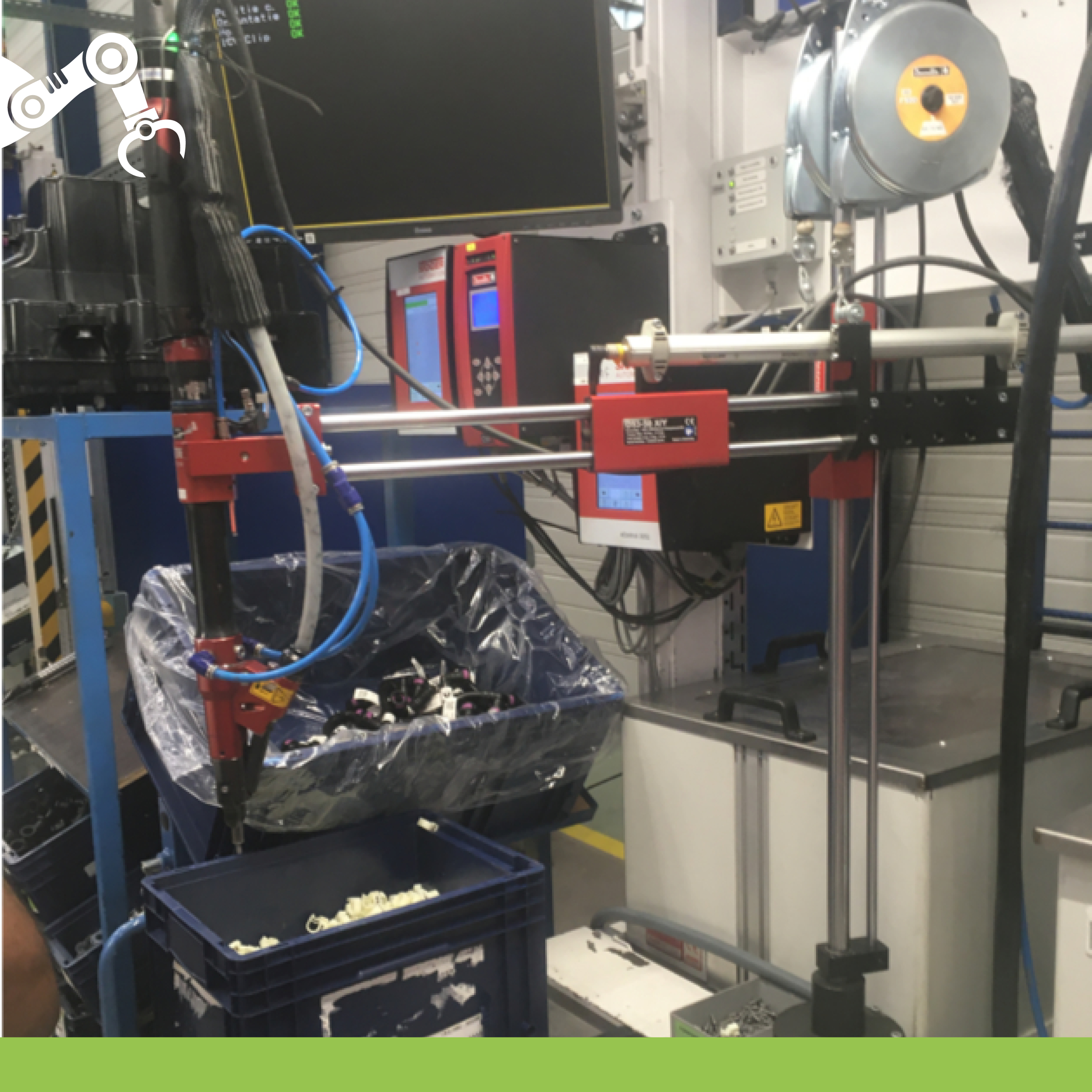
For this project we are developing a system for screwing screws – or “studs” – into a fuel tank. The screw work in this case used to be done manually using a pneumatic tool. A left or right screw tool had to be used, depending on the tank and screw type. Such a tool makes the work easier, but requires human effort. This is a great example of how you can reduce repetitive work while improving the ergonomic aspects of the process and the quality of the end result.
For this system, the sub-process to be taken over starts from the moment a tank is manually placed on a fixed holder. The process ends when all the studs have been screwed into the tank.
Cobot to provide access that is as free as possible
Since it is important to to install and remove tanks smoothly and, above all, quickly, we opt for as much free access to the installation as possible without any hindrance from all kinds of fencing (this also has a positive influence on the cycle times).
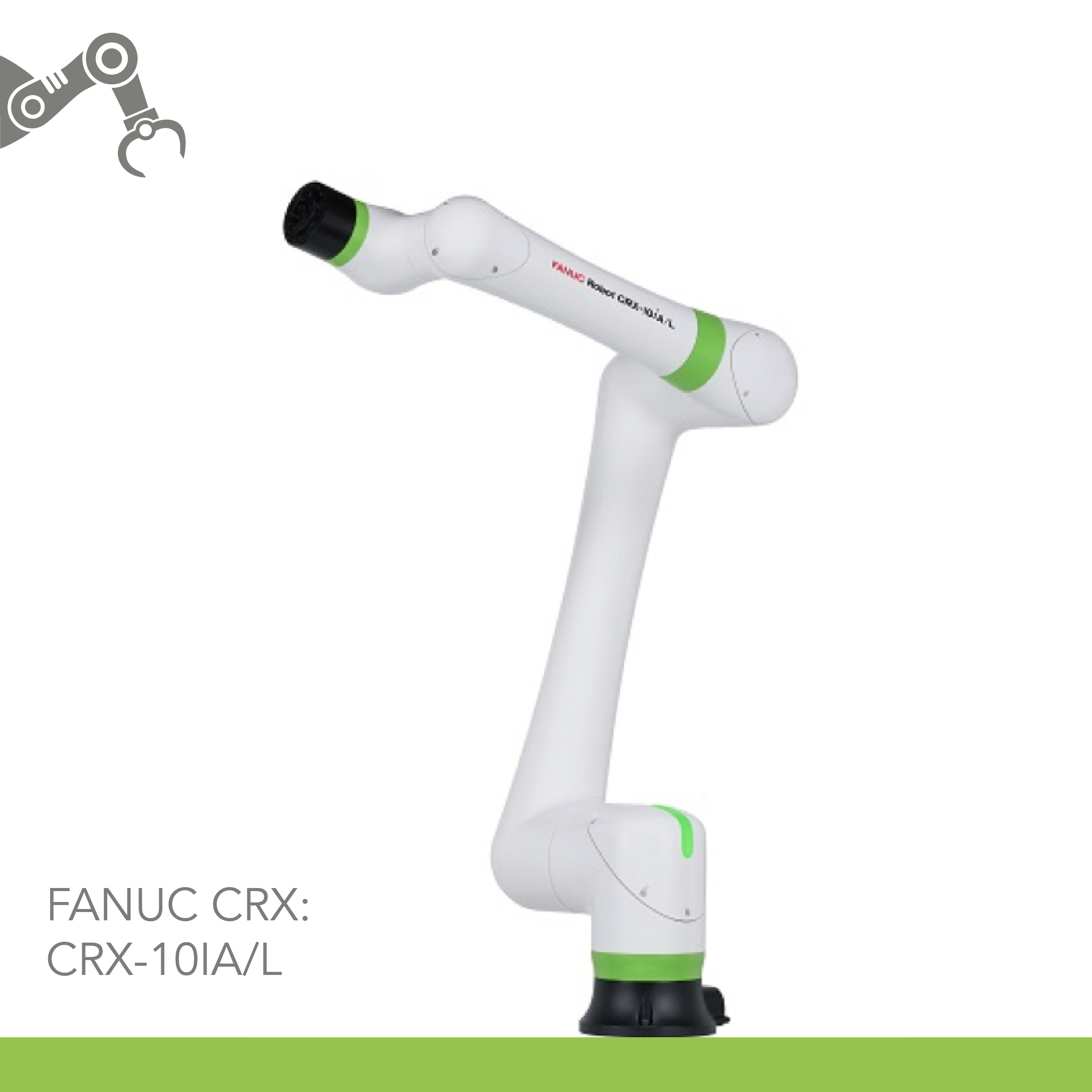
Taking into account the applicable safety regulations, a cobot (collaborative robot) is a great solution. Working with Cobots is particularly safe. You can compare their strength and movement with that of a human being. Yet a cobot works faster and more precisely, without the risks of real robots.
Although this project does not involve sharp screws – and the previous installation also involved a certain risk for the operator – we increase the safety to the max.
- The system stands or falls with the presence of the screw. We check this by placing a sensor in a sleeve under the tool.
- Has the screwing operation been completed correctly? The cobot moves to the next screwing position. If not, the operator is notified by a lamp
- When all the screws are in place, a green light will illuminate.
Space-saving vertical mounting
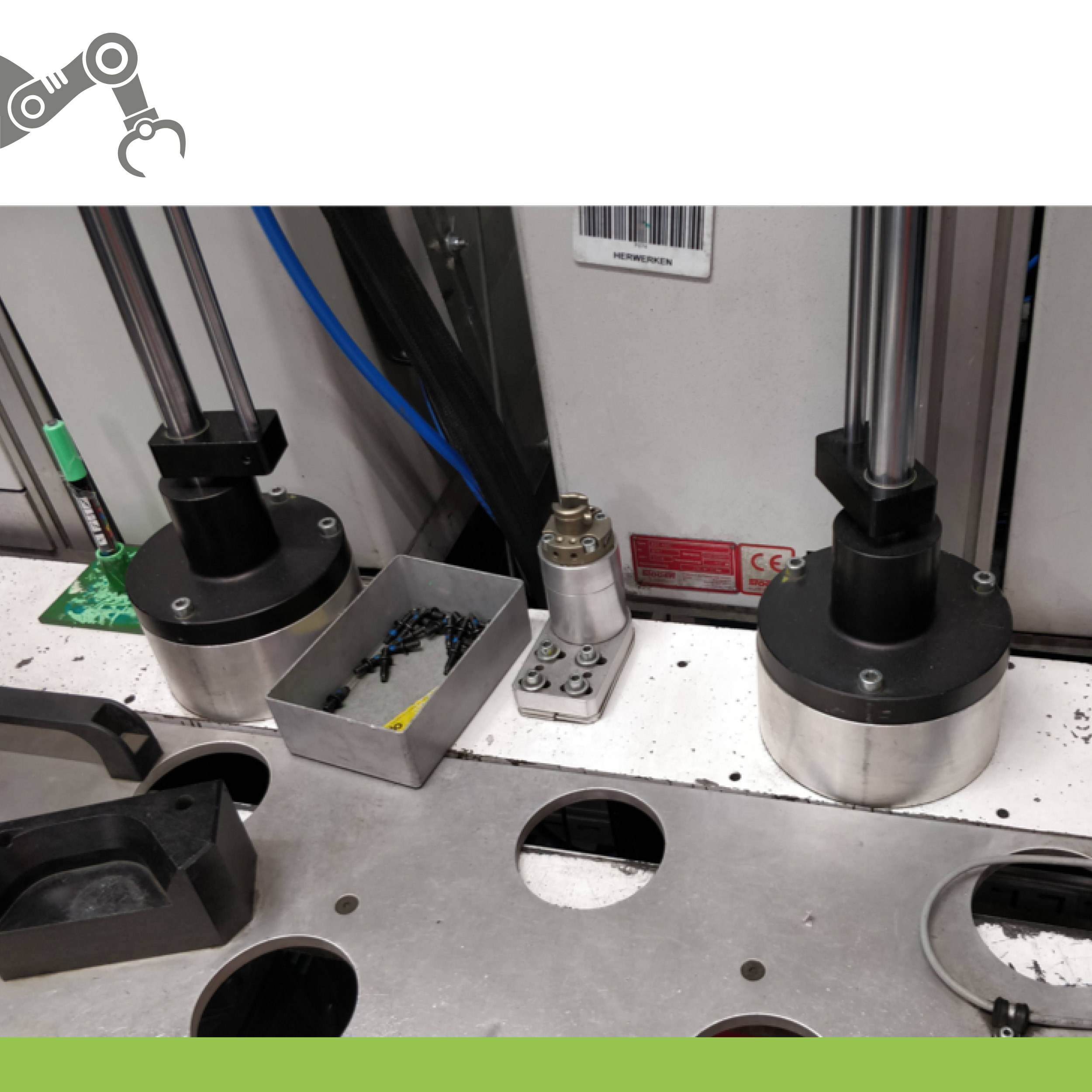
When changing the line, the cobot requires the correct tool to be on it. Because the screw tool is manually coupled to the cobot, we are designing a custom ergonomic quick coupling systemfor this. The operation is no longer mechanical-pneumatic; it has been replaced by a valve that feeds back to the system.
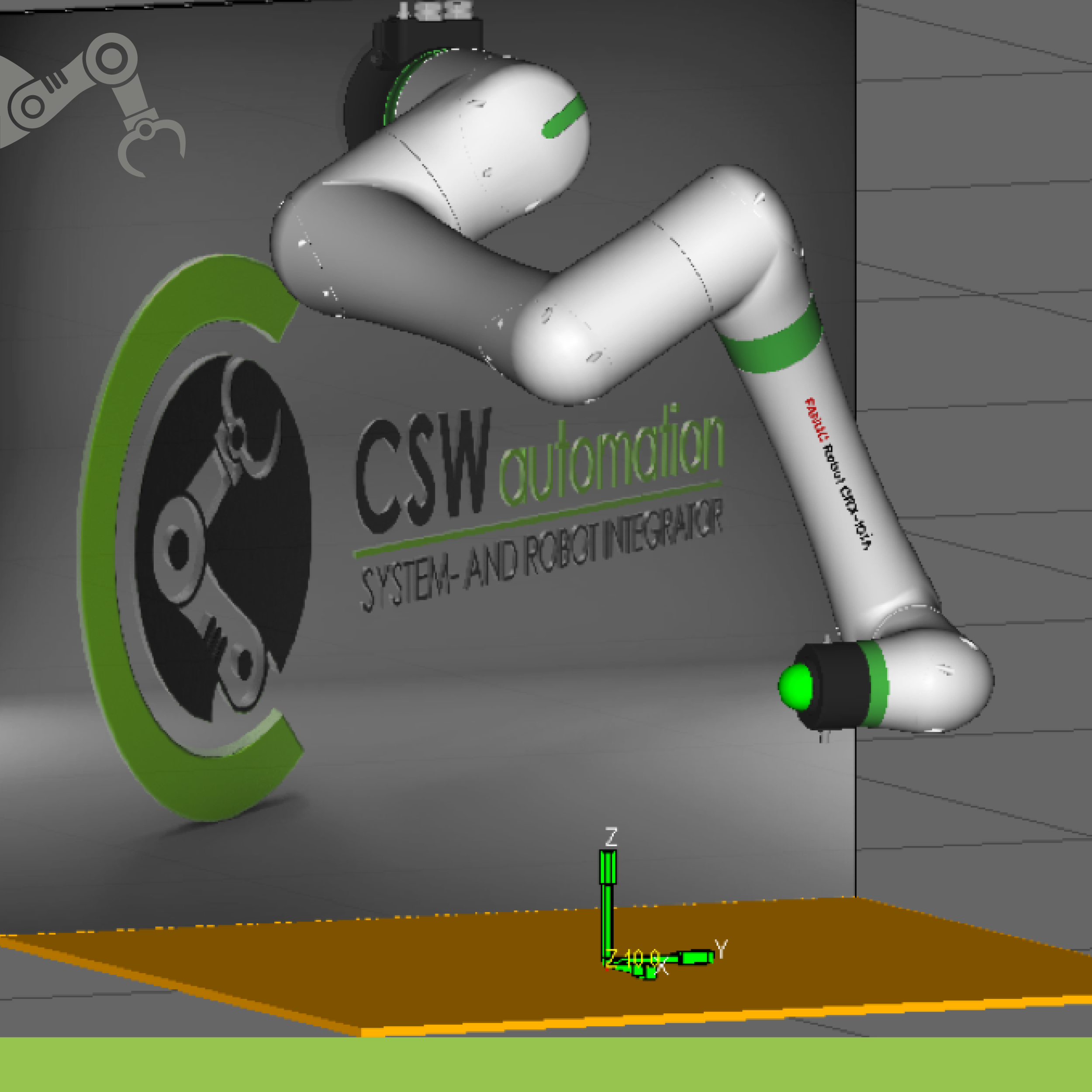
In addition, the cobot works from a solid base plate. The installation has been carried out vertically to save space and make (dis)assembly as simple as possible.
Expansion and modification of existing configuration
We start from the following existing configuration:
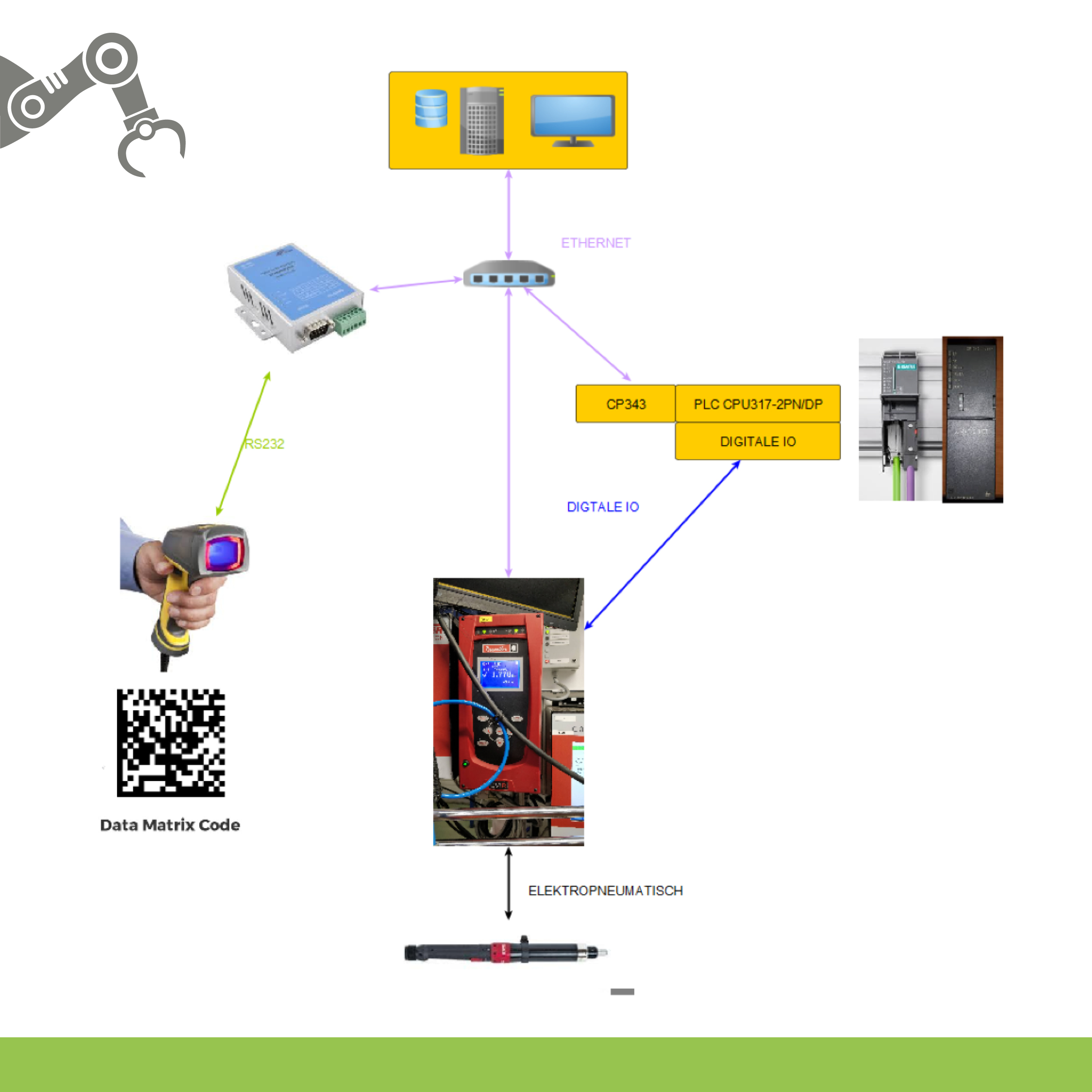
- A PLC (Programmable Logic Controller) and a higher level data communication system. This PLC remains the master.
- An HMI into which the tank type can be entered.
- • A hand scanner to read the tank ID.
- Screw installation: screw machine, guides, compensators, frame, etc.
- Track & trace system
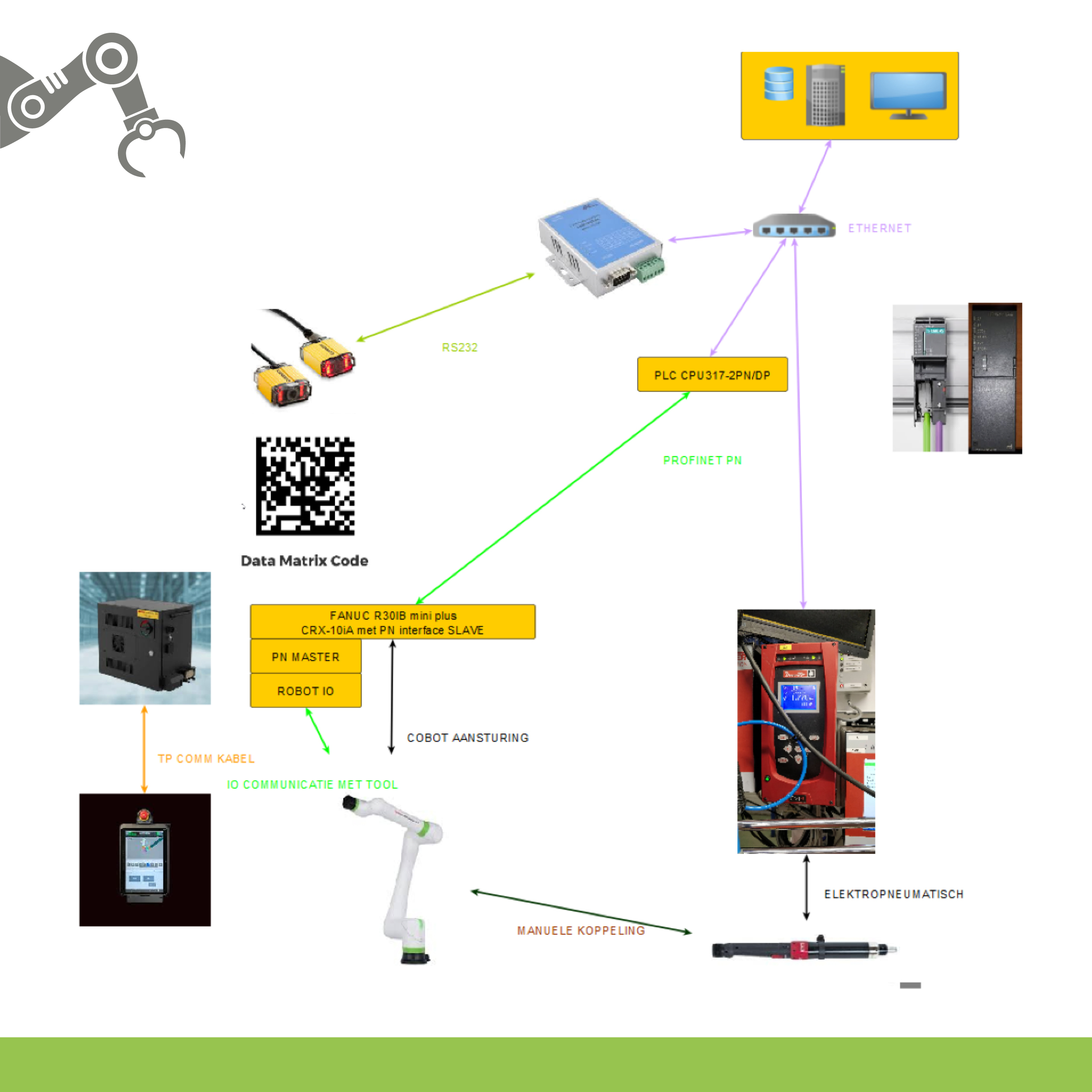
We adjusted the configuration to have:
- A new scanner to read the tank ID.
- A cobot that, based on the scan, knows which tank is on the holder, knows which screw pattern to use, and then screws the studs in correctly.
Control technology sees the concept like this:
- The operator places a tank on the holder and presses a button.
- The cobot scans the tank to determine the type.
- The higher system comes into operation, data is put in the PLC and the operator waits for a release via the PLC to the cobot.
- The cobot gives a signal for a new screw, moves to the right place and starts screwing.
Do you want to start working on your automation right away, or do you have any questions about the integration of cobots and/or robots?
INTROS will work closely with you to find the correct solution based on your production objectives. We take care of everything, from A to Z, and guarantee the quality you are looking for.
Contact us by sending an email to info@csw-automation.be or calling 011 18 43 93.